
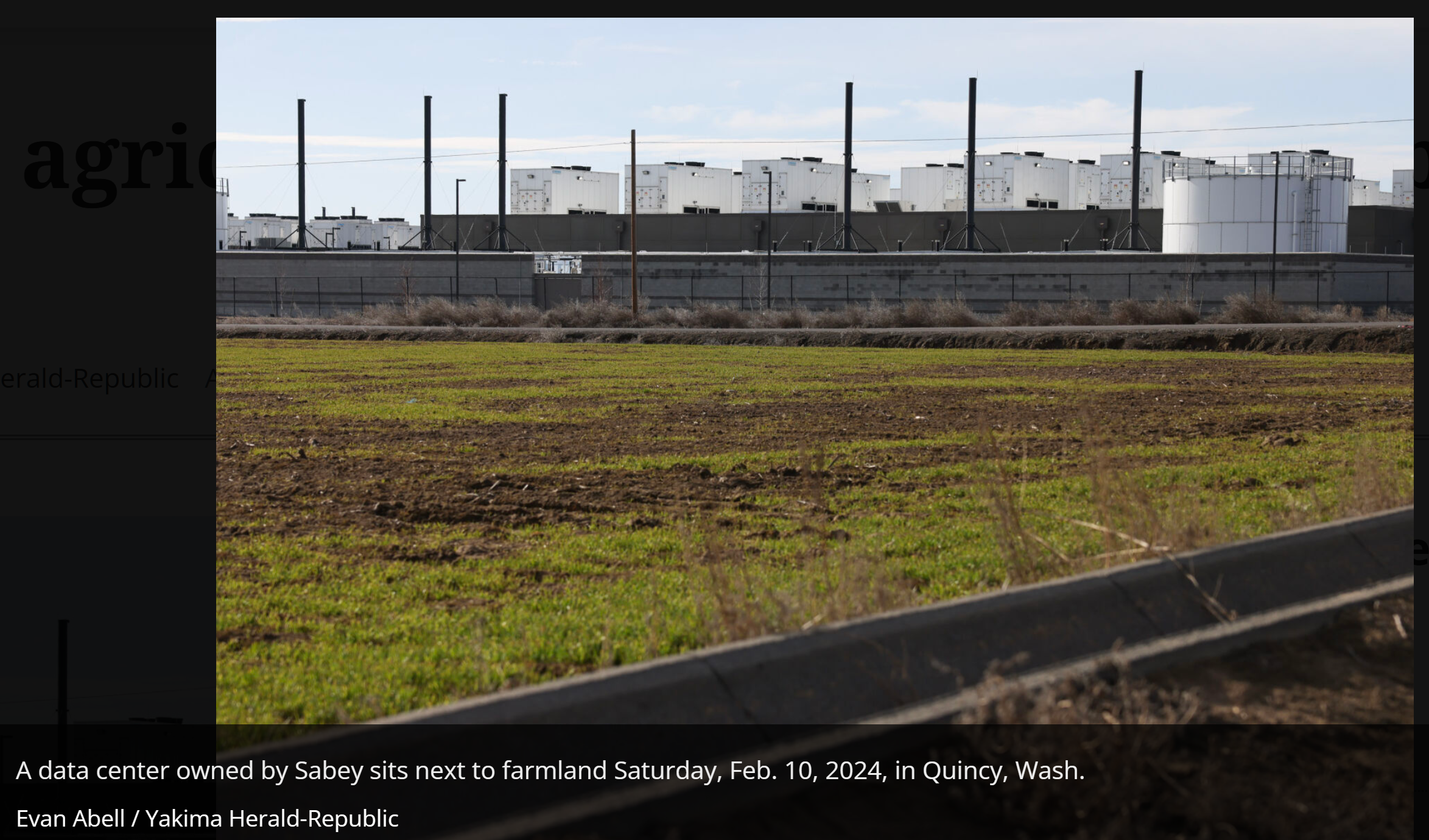
More than three decades after heavy metals in fertilizers were first investigated there, the Central Washington city of Quincy remains a harbinger of agriculture and other trends throughout the region.
Questions by city officials, farmers and others in Quincy during the 1990s were followed by a 1998 Food and Drug Administration safety test that discovered lead-contaminated carrots in bags of frozen vegetables.
All of this, along with reporting on the issue by The Seattle Times and other media, would eventually lead to tougher state and federal rules on the amount of heavy metals allowed in fertilizers.
Those efforts continue today and have expanded as grassroots environmental groups, state and federal regulators work to prevent agricultural and industrial contamination of soil, groundwater and air.
Within the past week, dozens of Sunnyside residents and environmental activists voiced their concerns about air quality and demanded more accountability over a biodigester proposed in the Lower Yakima Valley community.
The March 25 meeting at the Yakima Regional Clean Air Agency office considered the benefits of repurposing manure from dairy farmers into enough energy to power 90,000 homes vs. the potential for increased air pollution, traffic and groundwater contamination.
History of fertilizer regulations
Many Quincy residents, including former mayor and longtime activist Patty Martin, are well versed in the the harm heavy metals and other industrial waste can cause when it is recycled into fertilizer.
In the 1990s, Martin helped expose how steel mills and other industries were recycling their hazardous waste into fertilizer without any standards or regulation — a practice which she believes ruined many farms in and around her Grant County community, and threatened the health of farmworkers and land owners.
Her questions about the practice of recycling hazardous waste such as lead, arsenic and cadmium into fertilizer prompted Washington to adopt standards and regulations for their use. A few years later the Environmental Protection Agency adopted standards of its own, but left regulation up to individual states.
The issue in Quincy was highlighted in an investigative series by The Seattle Times. These stories later became a book, “Fateful Harvest: The True Story of a Small Town, a Global Industry, and a Toxic Secret” by Duff Wilson published in 2001.
However, many in Quincy resisted the efforts of Martin and others to investigate and regulate heavy metals in fertilizers.
Some farmers asked Martin to step down as mayor, and people who worked for local fertilizer companies and ag processing plants pressured the rest of the Quincy City Council to censure her. Eventually, the City Council voted unanimously to pull Martin’s liability insurance so she would have to defend herself if sued.
After being elected mayor in fall 1993 with double the votes of the incumbent, Martin lost her bid for re-election four years later. A dozen years after the election loss, the City Council unanimously rejected her appointment as city recreation director, despite years of involvement with swim programs, lessons and her role in securing grants for construction of the Quincy Aquatic Center.